Spatial Disorientation: What Pilots Need to Know
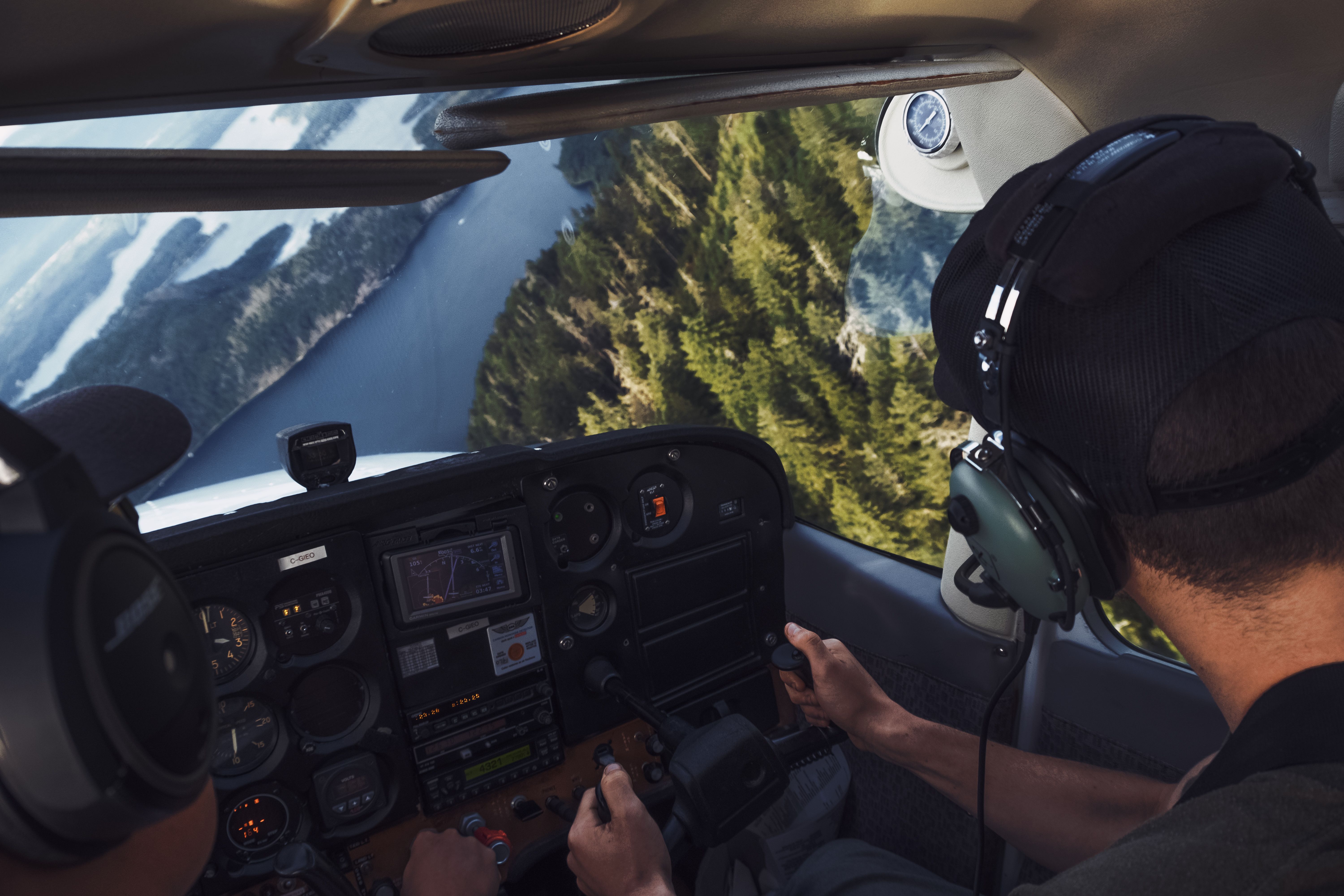
Learning to fly means learning to trust your training,even when your instinct is telling you something different.
Spatial disorientation occurs when a pilot's perception of the aircraft's position, attitude, or movement does not match what the aircraft is actually doing. A pilot may feel like the aircraft is flying straight and level when it is turning, feel as though the world around them is spinning, or even feel as though they’re tumbling backwards. The dangers of spatial disorientation increase dramatically when outside visual references are limited, such as during flight in clouds, haze, darkness, or other reduced-visibility conditions. In many cases, spatial disorientation can lead to CFIT (Controlled Flight Into Terrain).
For student pilots, understanding why spatial disorientation happens is an important part of learning how the human body responds to flight and why basic instrument skills matter, as well as why many organizations recommend all private pilots get an instrument rating and obtain proficiency and currency.
What Causes Spatial Disorientation?
The human body works perfectly when it is in the situation it was designed for, that is, attached to the Earth. When in the air and our orientation changes without us noticing or we lose references, our senses get confused fast. Our brains normally determine position and movement using information from several sensory systems:
Visual system: Information received through the eyes. This is the primary sense that pilots use to fly.
Vestibular system: Structures within the inner ear that help detect movement and balance. The semicircular canals help detect changes in pitch, bank, and yaw through movement of fluid over the cupula which stimulates hairs. The otolith organs detect gravity (or the sensation of it) by detecting linear acceleration.
Somatosensory system: Signals from the skin, muscles, tendons, and joints that contribute to our sense of position and movement. This is what many people are referring to when they say “flying by the seat of your pants”. G forces and slips/skids are typically felt and interpreted with this system.
On the ground, these systems usually provide information that agrees. In an aircraft, however, changes in acceleration, direction, and attitude can create conflicting sensory information.
When a clear horizon or other reliable visual reference is available, vision helps pilots maintain orientation. When that reference disappears, sensations from the inner ear and body can become misleading. If the pilot does not realize, the situation will turn dangerous fast. If the pilot does realize, it will feel like his or her world is spinning until the brain adjusts to the new situation.
The main issue with spatial disorientation is not that it’s hard to recognize that something is wrong, it’s that your body is hardwired to function while connected to the ground and to completely trust its own senses, and this can create a fatal combination of issues: The incorrect sensation can feel completely real.
Common Types of Illusions
Pilots can experience several different sensory illusions in flight. Understanding them helps pilots recognize why physical sensations should not replace reliable visual references or flight instruments. These illusions are commonly remembered with the acronym “ICEFLAGS”.
Inversion Illusion
The Inversion illusion occurs when a pilot pitches down rapidly, usually while arresting a climb. The fluid in the ears continues to move, and this causes the pilot to feel as though he or she is tumbling backwards. This may potentially lead to further forward input, both exacerbating the problem and increasing danger.
Coriolis Illusion
A Coriolis illusion can occur when a pilot makes a sudden head movement during a prolonged constant-rate turn.
The movement can stimulate the cupula (thus the sensory hairs) of the inner ear in a way that creates a powerful sensation of rotation or movement in another direction.
For pilots, this is one reason sudden head movements can be particularly disorienting during turns when outside visual references are limited.
Elevator Illusion
The elevator illusion is typically caused by short updrafts or similar, where a momentary increase in G force leads the pilot to believe the aircraft is in a climb. The pilot's instinct to this is to initiate a descent.
False Horizon Illusion
Lights on the ground in a relatively straight line such as roads, settlements in the distance, or illuminated obstacles can create the illusion of a horizon that is not parallel with the actual horizon, thus the pilot feels inclined to place the plane wings level with this false horizon.
When between layers of IMC (or simply in a low visibility situation) layers of clouds not parallel with the horizon can create a similar effect.
Leans Illusion
The leans can occur when an aircraft enters a gradual bank slowly enough that the inner ear does not detect the movement.
When the pilot recognizes the bank and returns the aircraft to level flight, the correction may create the sensation of banking in the opposite direction.
The instruments show that the aircraft is level, but the pilot may physically feel otherwise.
This creates a strong temptation to bank the aircraft in the direction that feels level instead of relying on the instruments.
Autokinesis
Autokinesis typically occurs when a pilot looks at dim, far away lights or objects for too long. A combination of eye strain and mental activity leads the pilot to believe that something is moving when it is not.
While typically not dangerous to normal operations, it can lead to erroneous sightings of traffic as well as cause issues with formation flight or similar. Autokinesis is avoided by shifting your gaze.
Graveyard Spiral
During a prolonged turn, the body's sensation of turning can gradually decrease. The pilot may begin to feel as though the aircraft is flying straight and level even though it remains in a bank.
If the aircraft begins losing altitude and the pilot responds by pulling back without correcting the bank first, the turn can tighten and the descent can increase.
The pilot's physical sensations may continue to conflict with what the instruments are showing, making disciplined instrument reference critical. The Graveyard Spiral is accurately named; in many cases it will lead to a fatal crash despite being completely recoverable at almost any moment from cruise to impact.
Somatogravic Illusion
Acceleration and deceleration can also create false sensations about the aircraft's pitch.
During rapid acceleration, a pilot may experience the sensation that the aircraft is pitching upward. During deceleration, the opposite sensation can occur.
Without a reliable outside visual reference, reacting to these sensations rather than the aircraft's instruments can lead to an incorrect control input. This can be especially noted in cases of takeoff or missed approach in IMC, where several accidents have occurred due to the instinct of the pilot to fight a nonexistent stall.
When Is Spatial Disorientation More Likely?
Spatial disorientation can occur when the visual information pilots normally use becomes limited, misleading, or unavailable.
Situations that can increase the risk include:
Flying in clouds or reduced visibility
Flying at night with limited ground references
Flying over featureless terrain or water
Haze or an obscured horizon
Gradual or prolonged turns
Rapid acceleration or deceleration
Turbulence
False visual horizons
Spatial disorientation isn't limited to new pilots. The FAA notes that pilots are susceptible to false sensory illusions, particularly at night or in certain weather conditions.
Training doesn't eliminate the body's ability to experience these sensations. Instead, it teaches pilots how to recognize and respond to them.
Why Pilots Learn to Trust Their Instruments
One of the most important lessons of instrument flying is simple: what a pilot feels and what the aircraft is actually doing are not always the same thing, in fact they’re usually not.
When reliable outside visual references aren't available, flight instruments provide the information needed to understand the aircraft's actual attitude and movement. It’s important to note that humans are incredibly good at convincing ourselves that our source of information is reliable (confirmation bias). As such, so long as our instruments pass cross-checks, they should be the primary source of information during conditions where there is a higher risk for spatial disorientation.
The FAA advises pilots experiencing spatial disorientation to rely on their flight instruments when making control inputs and allow time for the false sensations to dissipate.
That's easier said than done when the physical sensation feels convincing—which is exactly why training and proficiency matter.
How Pilots Can Reduce the Risk of Spatial Disorientation
Pilots can't prevent the human sensory system from experiencing illusions, but they can develop habits that reduce the risk of those illusions leading to loss of control.
Develop Strong Instrument-Reference Skills
Instrument training teaches pilots to maintain aircraft control using flight instruments when outside visual references aren't reliable.
For student pilots, training under appropriate supervision, especially in actual IMC instead of only simulated, can also demonstrate just how convincing false physical sensations can be.
Understand the Conditions
Weather and visibility should be part of the decision-making process before every flight.
Knowing when conditions could reduce or eliminate a reliable horizon gives pilots an opportunity to make safer decisions before encountering a situation that increases the risk of spatial disorientation.
Maintain Proficiency
Skills need practice.
Maintaining proficiency in instrument reference, night operations, and other applicable areas helps pilots respond more effectively when conditions become challenging. Many pilots who haven’t maintained proficiency or currency rely on their senses instead of their instruments, and many who maintain currency but not true proficiency rely on their instruments without cross-check. It is vital that a pilot maintain skill of all three components of attitude instrument flying – cross-check, instrument interpretation, and aircraft control.
Recognize the Conflict
A pilot who understands spatial disorientation is better prepared to recognize a situation in which physical sensations conflict with reliable instrument indications.
When that happens, pilots should rely on their training and instruments rather than attempting to fly based on sensation alone.
Why Spatial Disorientation Matters for Student Pilots
Spatial disorientation is more than an aviation vocabulary term. It demonstrates an important reality about becoming a pilot: learning to fly means understanding both the aircraft and the limitations of the person flying it.
Pilots study aerodynamics, weather, navigation, aircraft systems, regulations, and flight maneuvers. Human factors are another important part of that education.
Understanding spatial disorientation helps student pilots see why instrument skills, aeronautical decision-making, weather awareness, and proficiency all work together.
The goal isn't to become immune to sensory illusions. It's to develop the knowledge and skills needed to recognize when your senses may be misleading you and respond appropriately.
Build the Skills to Become a Safer, More Confident Pilot
Flight training is about more than learning how to control an airplane. It's about developing the knowledge, judgment, and decision-making skills that pilots rely on throughout their aviation careers.
At Flight College, students build those skills through structured ground and flight training as they progress toward their aviation goals.
If you're considering a career as a pilot, explore the Flight College Career Pilot Program or schedule a call with our team to learn more about the training path.
Sources
Federal Aviation Administration — Pilot's Handbook of Aeronautical Knowledge, Chapter 17: Aeromedical Factors
Federal Aviation Administration — Instrument Flying Handbook
Federal Aviation Administration — Airplane Flying Handbook, Chapter 5: Maintaining Aircraft Control
Federal Aviation Administration — Spatial Disorientation: Trust Your Instruments
FAA Civil Aerospace Medical Institute — Spatial Disorientation and Aerospace Medicine resources